
CRGIS Education

From NasaCRgis

Jump to: navigation, search


Contents

[top] History of the National Aeronautics and Space Administration

[top] History of NASA with Project on Oral History

Space flight has captivated the American public throughout history. However, its popularity has varied over time. This lesson plan concludes with students interviewing an adult about their memories of any of NASA’s launches and work in teams within the classroom to understand the varied experiences of historic events.


[top] Activity Book - General NASA History Activity Book (elementary age)

[top] Astronaut Training

Astronaut training banner.gif

[top] Human Space Flight

KSC-edu.jpg

Kennedy Space Center printed an educational activity booklet several years ago on Human Space Flight. Although slightly dated, the are ten activities that would be appropriate for elementary age students.

  • Moon Survival
  • Gravitational Forces
  • Reaction Time
  • Number Dexterity
  • Designing a Space Station
  • What You Eat
  • Zero-G Demonstrator
  • Phototropism Maze
  • Space Station Model
  • Respiration


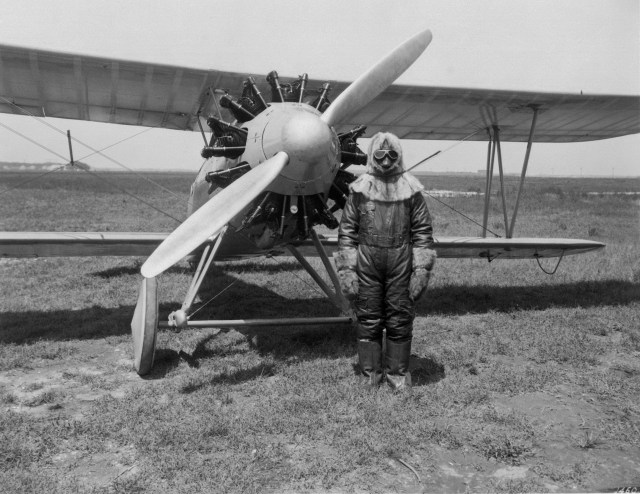
Dressing for Altitude

Read about one of NASA's newest books, Dressing for Altitude. It is important to note that it is not about spacesuits. It's about pressure suits.

"The differences between a full-pressure suit and a spacesuit are subtle," said Dennis R. Jenkins, author of "Dressing for Altitude: U.S. Aviation Pressure Suits – Wiley Post to Space Shuttle."

Publication of "Dressing for Altitude" was sponsored and funded by the communications and education department of NASA's Aeronautics Research Mission Directorate. Download eBook.


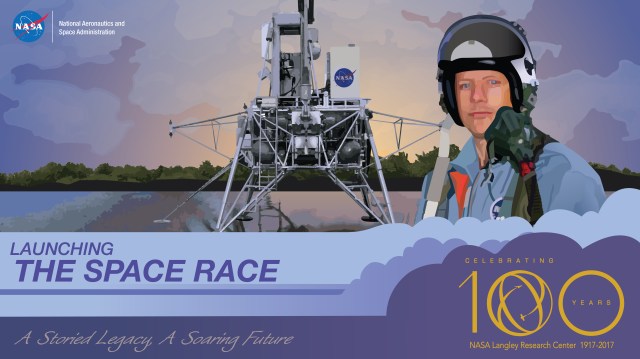
Simulator Training with Neil Armstrong in 1969.


Astronomy Classes at Morehead Planetarium

1965 McDivett White (Gemini)

Morehead Planetarium and Science Center, with one of the largest planetariums in the United States, is located on the north end of the campus of The University of North Carolina at Chapel Hill. The Morehead Planetarium and Science Center Building was a gift of John Motley Morehead III (1870-1965), class of 1891, whose mission of educating the community lives on. Since 1949, the planetarium has been a giant classroom for students, teachers, school groups, senior citizens, youth groups and the general public. As the United States space program began, the Morehead provided training for U.S. astronauts from the Mercury program to the Apollo-Soyuz program.

Ten years after opening, Morehead Planetarium was called to serve not only the people of North Carolina but also the nation’s burgeoning space program. Astronauts needed training in celestial navigation to ensure that they would be able to pilot their spacecraft if navigational systems failed. Visit their webpage for a long list of astronaut who trained there.


Effects on the Human Body

Before takeoff, astronauts entered the space craft to practice countdowns, take off sequences, and flight tests at Kennedy/Cape Canaveral. (See more).


Splash Down

Each astronaut also had to learn how to exit his space capsule once it splashed down in the ocean. (See more.)


Geology Field Trips Apollo astronauts were responsible for collecting geological specimens (rocks and sediment) from the moon's surface. (See more)


Lunar Roving Vehicle

In June 2008, NASA tested several lunar concepts at the dunes near Moses Lake, Washington. For more on these tests, see Moses Lake. Moses Lake page includes links to 20 videos of the tests.

[top] Mercury Program Student Activity

[top] Apollo Program Student Activity

Teacher Pages for Astronaut Training

Traveling outside of Earth's atmosphere is not an easy thing to do. The first American astronauts to do so were modern day pioneers part of NASA's Mercury project. The success of the Mercury project lead to the Gemini and Apollo projects, and in 1969, Neil Armstrong was the first human to walk on the moon.

What had to happen before astronauts could walk on the moon? Scientists and engineers worked long hours creating the machinery and equipment required for safe transit to and from space as the search for our nation's first astronauts was begun. After the astronauts were identified, each man began a rigorous training cycle in locations around the world.

The first American astronauts to travel outside of the Earth's atmosphere were part of NASA's Mercury program. Their success led to the Gemini and Apollo programs.

This activity allows students to select the mission and then explore the astronaut's Space School by using an interactive online map.

Before selecting your training program, think about what is happening in this photo.

1965 Weightless Walking.jpg

For further reading, see the Grumman Horizons special issue on Apollo, our man-on-the-moon program; Vol. 4, Number 2. 1964.

Also, read the day-by-day account of the Log of Apollo 11.

[top] Neutral Buoyancy Simulator - What is Buoyancy?

Nbs.gif

The Neutral Buoyancy Simulator provides a simulated weightless environment needed to perform engineering tests in preparation for space missions. The extra vehicle activity for the Skylab rescue and Apollo Telescope Mount film retrieved was developed at Marshall Space Flight Center.

[top] Exploring NASA Centers

Geography is defined as the study of the Earth and its lands, features, inhabitants, and phenomena. It is important to know how the location of something influences people, the environment, the economy, and how they are all connected. Geographic Information Systems (GIS) can help decision makers choose the right locations for businesses, government agencies, even satellite and space exploration mission launches. This lesson demonstrates how geography influences where NASA Centers across the United States are located.

The lessons incorporate the use of a geographic information system (GIS). GIS integrates hardware, software, and data for capturing, managing, analyzing, and displaying all forms of geographically referenced information. GIS allows us to view, understand, question, interpret, and visualize data in many ways that reveal relationships, patterns, and trends in the form of maps, globes, reports, and charts. A GIS helps you answer questions and solve problems by looking at your data in a way that is quickly understood and easily shared.

Download the lesson plan.


[top] Early American History

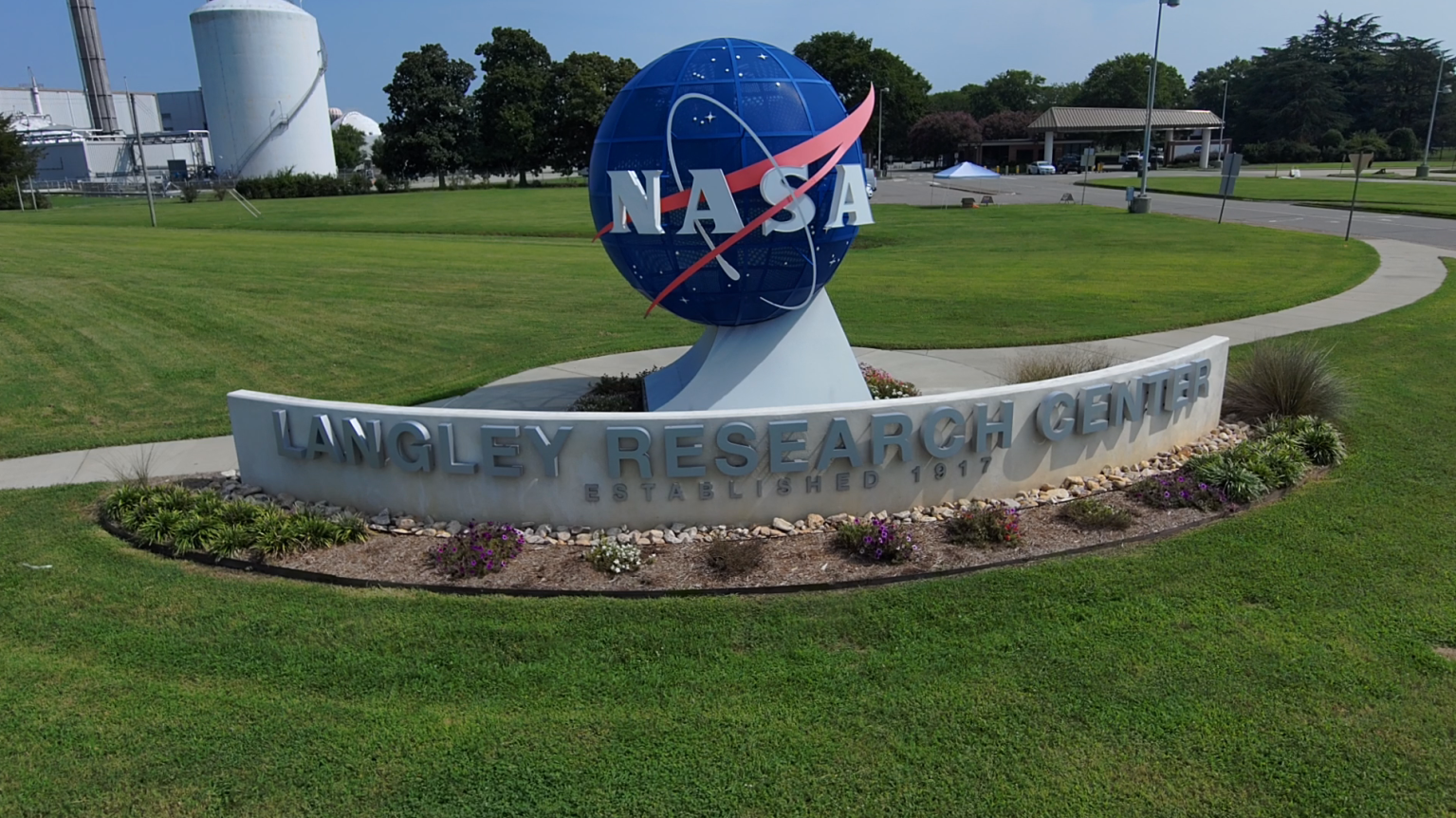
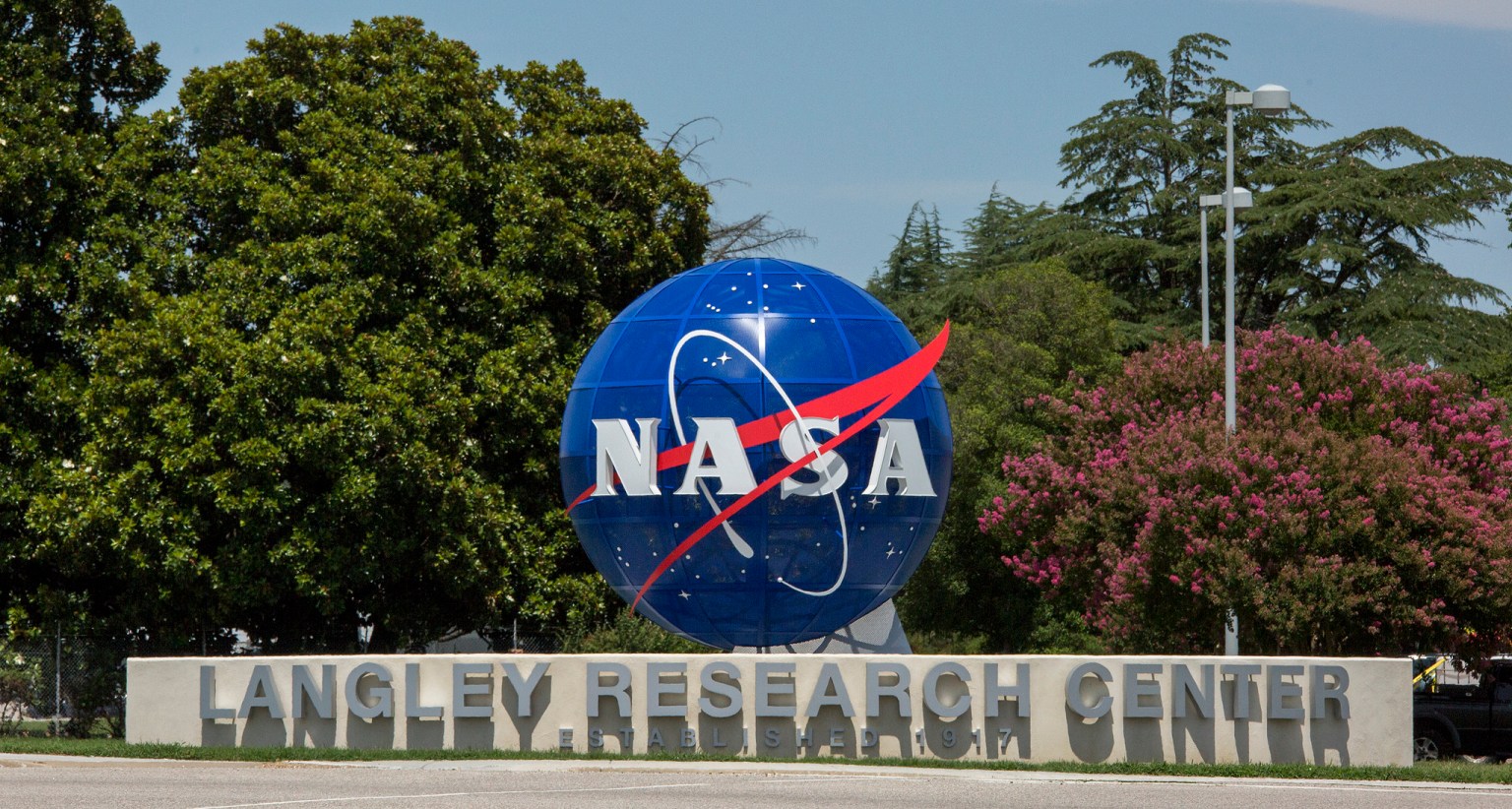
[top] NASA Langley Research Center

Early American Banner.jpg

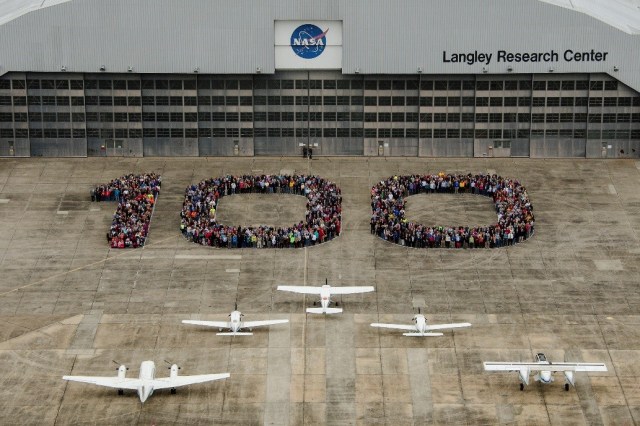
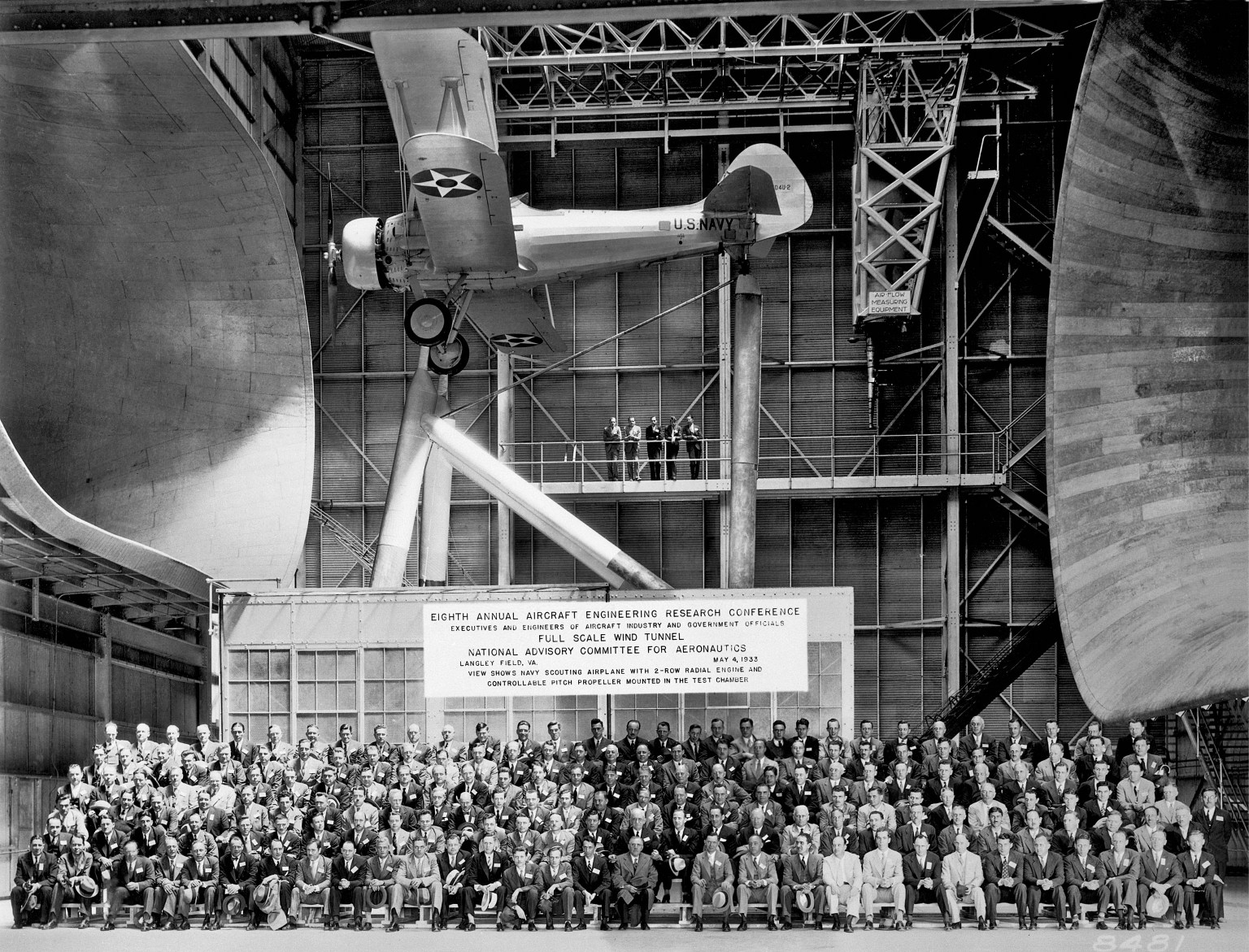
Many significant historical figures and events are associated with land now used by NASA Langley Research Center and Langley Air Force Base in Hampton, VA. The most well known former inhabitant is George Wythe, a signer of the Declaration of Independence. The first European to live on the property was most likely John Laydon, who arrived in April of 1607 on the Susan Constant. Laydon and Ann Burrows were the first couple married in Colonial America, and Virginia, their child, was the first child born in the new colony. Documentation of the plantations provides insight into the lives of colonists during great events in American History, from the Revolutionary War to the post-Civil War period.

This activity allows you to learn about families who lived here before NASA and the Air Force Base were built. The objective of this activity is to provide a practical history of the area to Virginia students studying Virginia and Early American History, using documents (including maps) of the studied time frames. Portions of this information was obtained from Archaeological Surveys commissioned by NASA Langley Research Center and Langley Air Force Base.

Student Activities

Teacher Pages


[top] NASA Langley History Books

New.gifOur office, and the History Office, are dedicated to document and preserve our remarkable history through a variety of media. The following publications specifically relate to NASA Langley Research Center and are available in a variety of formats.


Winds.jpg
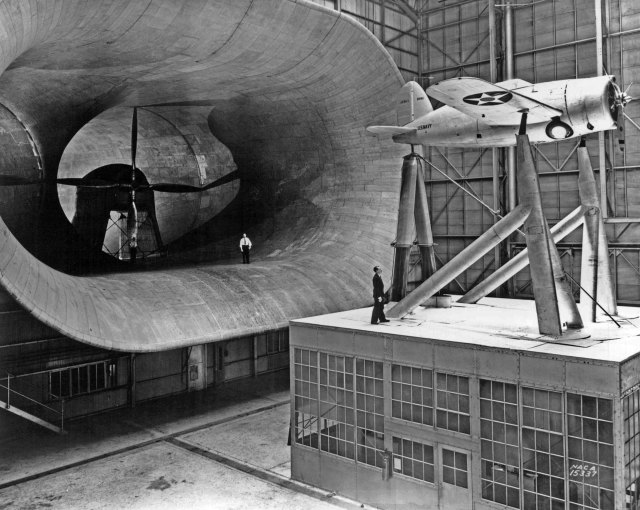
Winds of Change: Expanding the Frontiers of Flight: Langley Research Center's 75 Years of Accomplishment 1917-1992. 1992. This commemorative volume highlights in pictures and text seventy five years of accomplishments of the Langley Research Center. The introductory matter features wind tunnels and their contribution to the development of aeronautics. A chronological survey details four different periods in Langley's history. The first period, 1917-1939, is subtitled 'Perfecting the Plane' which details Langley's contribution to early aeronautics with examples from specific aircraft. The second period, 1940-1957, focuses on the development of military aircraft during and after World War II. The third period, 1958-1969, tells the story of Langley's involvement with NASA and the satellite and Apollo era. The fourth period, entitled 'Charting New Courses: 1970-1992 and Beyond', treats various new topics from aerospace planes to Mars landing, as well as older topics such as the Space Shuttle and research spinoffs.

Click here for black and white version in PDF format.

Click here for color version.


Partners.jpg
Partners in Freedom: Contributions of the Langley Research Center to U.S. Military Aircraft of the 1990s. 2000. Throughout it history, NASA Langley has maintained a close working partnership with other agencies to support the defense of our country. This publication details contributions such as drag clean-up in WWII, supersonic flight, development of the Century-series fighters, and many others. This particular book focuses on contributions to U.S. military aircraft of the 1990s. Virtually all military aircraft that participated in Operation Desert Storm, Kosovo, and other peacekeeping missions of this era have Langley technical contributions to their design, development, and support. Many of the military aircraft as of late 1999 were over 20 years old. NASA Langley activities the contributed to the development of some of these aircraft began over 50 years prior.

Teachers can request copies of this book from the Virginia Education Resource Center by emailing Swee Hart.

Click here for PDF format.


Concept.jpg
Concept to Reality: Contributions of the NASA Langley Research Center to U.S. Civil Aircraft of the 1990s. 2003. Langley's legacy of critical contributions to the civil aviation industry includes a wide variety of activities ranging from fundamental physics to applied engineering disciplines. Through a variety of mechanisms, the Center has maintained an awareness of the unique problems and challenges facing the U.S. civil aviation industry. Researchers have conceived and conducted extremely relevant research that has been applied directly to civil aircraft, resulting in increased performance, enhanced safety, and improve competitiveness. Written as a companion to Partners in Freedom, the book provides significant examples of the impact of Langley's research on civil aircraft of the 1990s in areas such as take and and landing, crash worthiness, stall spin behavior, and other challenging technical areas. Differing from military involvement, constraints in the civil arena are especially apparent during startup and development of commercial aircraft. Nonetheless, fundamental generic research, general guidelines for advanced design, unique facilities, and specialized expertise have been valued and applied by industry to a large number of current civil aircraft.

Teachers can request copies of this book from the Virginia Education Resource Center by emailing Swee Hart.

Click her for PDF format.


Crafting.jpg
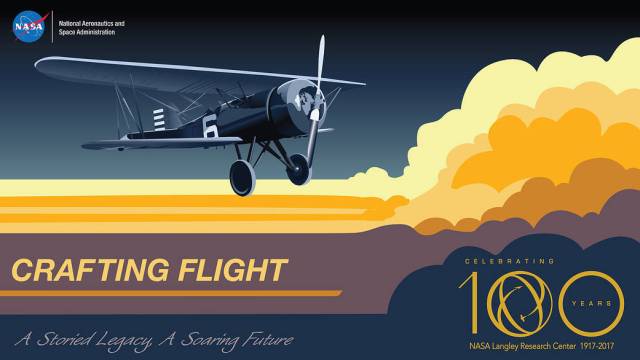
Crafting Flight: Aircraft Pioneers and the Contributions of the Men and Women of NASA Langley Research Center. 2003. A self-contained history of NASA Langley's contributions to flight, along with support and contributions form other NASA Centers and organizations. Written in celebration of 100 years of flight, this publication looks back over countless contributions of many individuals. Forward written by Delma Freeman, director of Langley Research Center at that time.

Copies may be ordered from the History Office.

Click here for PDF format.


Innovation.jpg
Innovation in Flight: Research of the NASA Langley Research Center on Revolutionary Advanced Concepts for Aeronautics. 2005. A companion book to Partners in Freedom and Concept to Reality, this volume examines the investment in innovation, expertise, researchers, and unique facilities at NASA Langley. Literally thousands of revolutionary concepts and advanced technologies for aeronautics have emerged. Unfortunately, only a handful of advanced concepts are ever applied. Factors that inhibit the application include cost, environmental impact, safety, complexity, world events, technical barriers, and others. The objective of this book is to discuss the importance of innovation and the role of the revolutionary advanced concepts within the aeronautics research community, and to provide information on typical advanced research projects conducted at Langley that have not yet been applied to production aircraft.

Teachers can request copies of this book from the Virginia Education Resource Center by emailing Swee Hart.

Click here for PDF format.


Capture.jpg
From Biplanes to Apollo. 2012. A brief history of the NASA Langley Center over the first 55 years of existence. Book includes contributions to the technological developments of manned flight from fabric-covered biplanes to the dramatic moon missions of Apollo. The significance of the contributions to aeronautical and spaceflight development resulted in designation of a historic district. Copies are available at various visitor centers across Hampton.

Teachers can request copies of this book from the Virginia Education Resource Center by emailing Swee Hart.

Click here for PDF Format


[top] Museum in a Box

The Museum in a Box program brings the physical sciences of flight to students in grades K-12.

Great for educators at museums, science centers and schools, Museum in a Box provides exciting hands-on/minds-on lessons with an aeronautics theme to inspire future scientists, mathematicians and engineers.

The lessons are tied to all national science and math standards.

Personal tools
Navigation