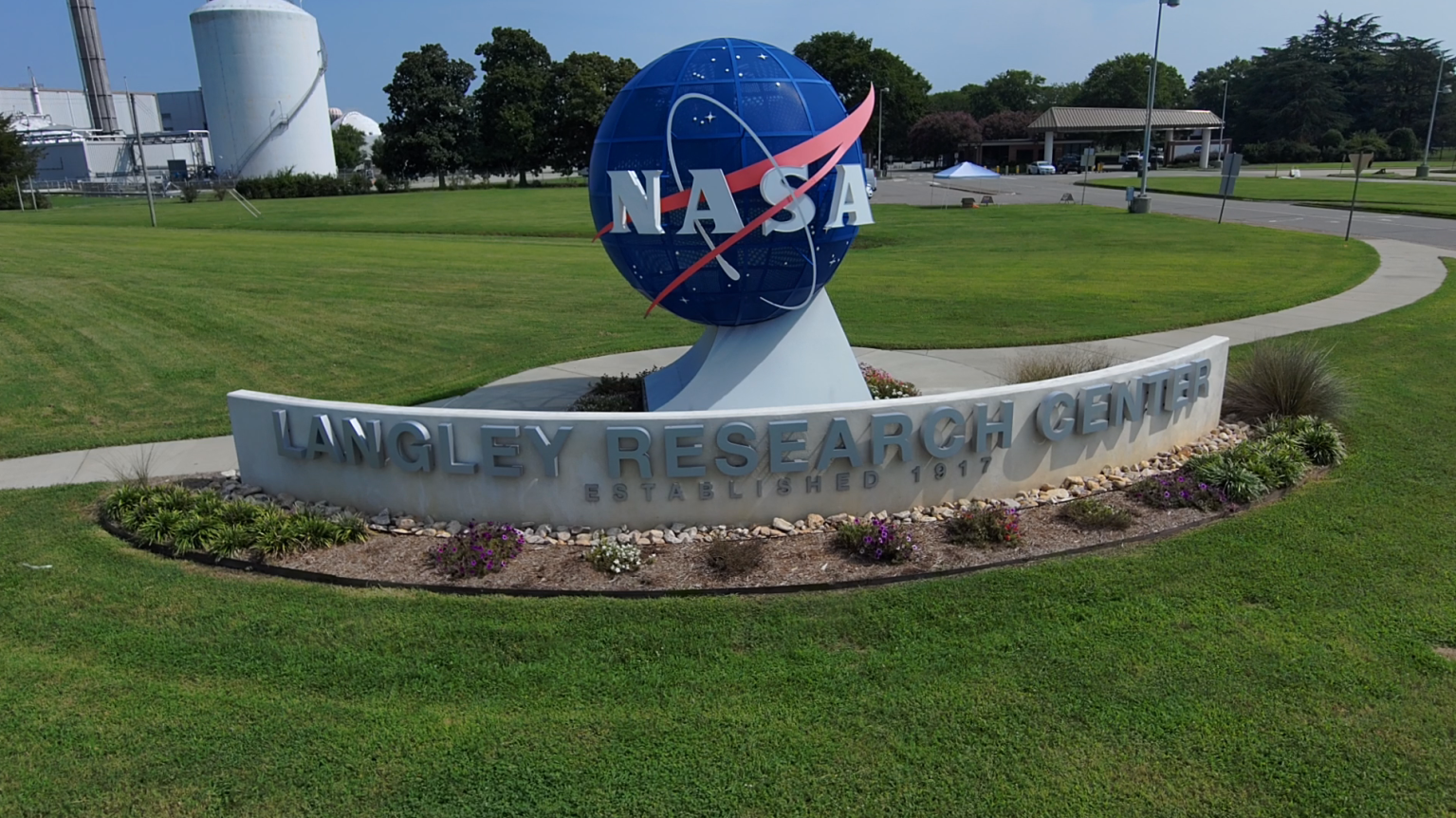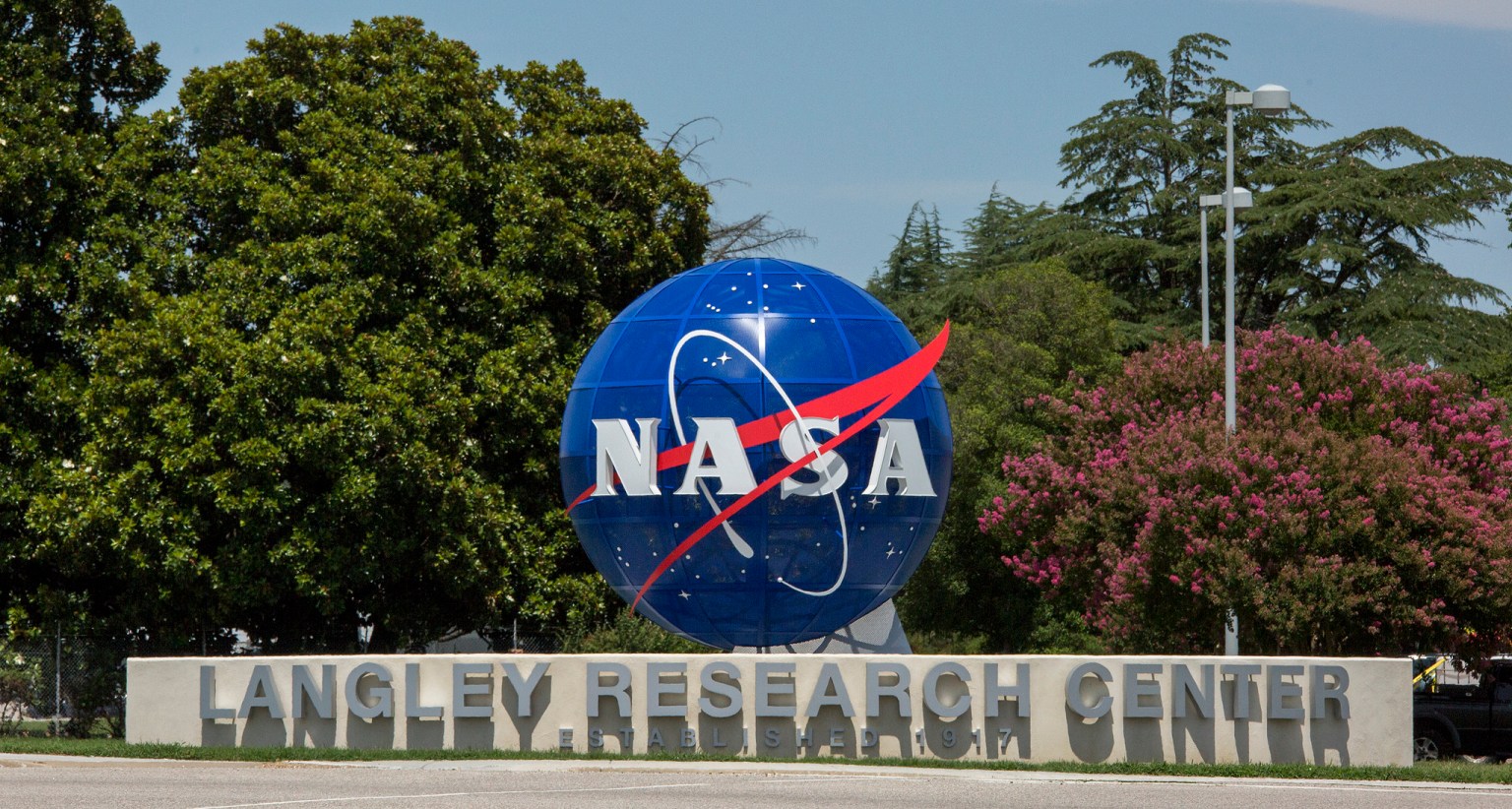


Langley Research Center

From NasaCRgis

(Redirected from Larc)
Jump to: navigation, search
Multimedia.jpg Historic Site & Building Pages Schoolhouse.jpg Education Question.gif Mystery Photo YouTube.gif CRGIS YouTube Book.png Air Scoop and Researcher News
LangleyField.jpg


Contents

[top] Location and Land Area

Langley Research Center (LaRC) is located approximately 150 air miles south of Washington, D.C. in Hampton, Virginia(state map).
Jamestown Tag
Elizabeth City County, now know as Hampton, was established in 1634 as one of the eight shires of the early colony. Hampton was established by an act of the assembly in 1680 and incorporated Elizabeth City County in 1952. Hampton is the oldest continually occupied English establishment in America. It's history is closely tied with nearby Jamestown. An archaeological artifact from Jamestown flew on NASA's space shuttle Atlantis and returned to earth on June 22, 2007 at the end of the STS-117 mission.


LaRC occupies 760 acres of Government-owned land and is located in two areas approximately 3 miles apart and divided by the runway facilities of Langley Air Force Base and the Headquarters of the Air Combat Command.
2005 Aerial
The runways and taxiways which are under Air Force control are used jointly by the Air Force and NASA. NASA's requirement for use of these facilities is directly related to the agency's aeronautical flight research activities. Individual Property Pages provide details, photos, and documents associated with sites. The West Area consists of 787 acres, 430 acquired by NASA by condemnation and 357 transferred to NASA from the Air Force. The East Area comprises 20.16 acres under Air Force permit. Runways, some utilities, and certain other facilities are used jointly by NASA and the Air Force.


Today, the LaRC complex includes over 40 major research facilities and approximately 180 shops, administrative facilities, and support facilities, and is one of the larger NASA Research Centers. A portion of the NASA staff comprises professional engineers and scientists who are technical experts in the fields of aerodynamics, loads and structures, thermodynamics, electronics, space technology, digital systems, computational analysis, systems analysis, and related fields. The remaining personnel include skilled administrators, model makers, technicians, and other support personnel.

[top] The East Area

The East Area is located on land leased from Langley Air Force Base. It is the original 1917 portion of Langley Research Center and contains 7 major NASA facilities. Runways, some utilities, and certain other facilities are used jointly by NASA and the Air Force. Structures in the East Area occupied by NASA are all older buildings, primarily consisting of major wind tunnels and supporting facilities, such as supporting offices, compressor stations, and substations.

[top] The West Area

The West Area contains the major portion of the Center with the great majority of the facilities located there. The earliest facility was built in 1940; and the remainder were constructed primarily during spurts of construction activity. The buildings are generally two to three stories high, of permanent construction using brick, concrete, steel, and masonry block, and are well-maintained. Streets are paved, gently curving, and bordered in many stretches with shade trees such that this area of the Center presents a campus-like appearance.


[top] Early American History

[top] Prehistoric

Archaeological and historical evidence from the vicinity indicates that this region had been under water prior to human occupation. An accidental find in 1996 of fossilized whale bones was made by surveyors Vanessa Butler and Kit Cain. The bones were later identified as the remains of a baleen whale that died 3 1/2 million years ago. The 30-foot juvenile was found at a piping trench under construction.


Following the stabilization of sea levels and the formation of the Chesapeake Bay, evidence points to human occupation since circa 10,000 years ago with villages developing around 3,000 years ago. Sites most likely represent limited activity camps with more long-term occupations at the margins of the Back River. Occupants of the region during prehistoric times can be divided into several cultural-temporal periods, characterized by differing adaptations to changing climatic and environmental conditions: 1) Paleoinidian, 2) Archaic, and 3) Woodland. Artifacts at LaRC indicate the earliest occupation during the Archaic period. In 1964, skeletal fragments were uncovered at a construction site. The partially fossilized bones were analyzed at the Armed Forces Institute of Pathology and were in typical condition for bones subjected to ground water action for several hundred years. The material was comparable to to previously identified bone in the 7000-8000 year old range. The analysis estimated the bones to be of a young male in his thirties from the Archaic Period.


The Woodland period encompasses the introduction of horticulture and ends with contact by European societies. Archaeological surveys at LaRC have identified 14 sites with prehistoric components. All of the prehistoric sites consist of low density lithic scatters. Sites with discreet boundaries encompass almost 11,000 square meters. Artifacts appear to correspond to settlement patterns defined by archaeologists for the Coastal Plain in this region. In general, residential sites for Archaic and Woodland period sites have been identified along major drainages or at margins of large wetlands. Brick Kiln Creek and Tabbs Creek comprise the principal drainages in the LaRC facility.

[top] Colonial

Sustained direct contact between the Native American and European societies commenced in the region with the English settlement of Jamestown in 1607 and extended to 1622 when the Powhatan attacked the settlements in the James Valley. The period ends in 1646 after a second series of conflicts resulted in the Powhatans relinquishing their remaining claims in the area. The region relied on agriculture throughout its history and remained primarily rural until the twentieth century ( See Timeline).


By the 1630's, the areas around LaRC had been settled by European colonists. Much of the land was obtained through a grant from Charles I, King of England, in 1635. That patent however mentions earlier patents dating from 1620-1635 including the Moore, Laydon, Thompson, Garnett, Christmas, and Syms families. John Laydon was the first European married in the new country, and his daughter was the first child born in America who survived into adulthood.


Chesterville
Part of the Laydon and Garnett lands would become part of the land owned by Thomas Wythe in 1676. Thomas Wythe, father to George Wythe, inherited the land in 1694. The Chesterville Plantation, or Wythe homeplace, was the home of George Wythe, signer of the Declaration of Independence.
G. Wythe
Among the known features at this former plantation were two dwellings, a brick kiln, a cemetery, and a boat landing and granary. The older of the two dwellings had a stone foundation and appears to represent a seventeenth-century house. The other consists of a brick, two-story house was built around 1771. Chesterville Plantation is listed on the Virginia Register (1972) and the National Register of Historic Places (1973) for its archaeological significance and association with a historic person.


Benjamin Syms left the first legacy for the promotion of education by deeding his land and eight cows for the establishment of a free school around 1647. Thomas Eaton followed establishing the Eaton Charity School. The two schools operated independently of each other until after the Revolution. They were probably on adjoining sites, occupying land where Langley Field was later located. In 1804, Hampton residents called for combining the schools and relocating the resulting school from the Back River to the town of Hampton. The petitioners won their case and the Hampton Academy was in operation by 1810.


Cloverdale Pottery
Although the earliest European occupation of the area dates to the seventeenth century, most of the archaeological sites date between the mid-eighteenth to early twentieth century. Twenty-one sites from this period lay within LaRC boundaries or within a 1.6 kilometer radius of the center. These sites appear to represent domestic habitation sites with associated outbuildings, cemeteries, and other related features. These sites offer the opportunity to study several aspects of tidewater history and cultural development. Site types include relatively large plantation complexes as well as small subsistence farms.


Cloverdale
The original four room house at Cloverdale was built about 1737 with a two and a half story addition built about 1830. The site represents the remains of a plantation occupied between the 18th and 20th centuries. Excavations revealed brick and cobble foundations dating from the 18th through the 19th centuries. In addition, a cellar was noted within the foundation walls as well as a possible trash pit. The site is a relatively rare example of a rural domestic farmstead spanning a lengthy period or social and economic change in the area. The Vaughan-Smith cemetery, associated with Cloverdale, is in the area closest to the Syms School site. The Cloverdale property was for a time split between the Vaughan and Smith families. The property was reunited during 1875-1878 and would later become part of the NASA installation. The house was demolished in 1955.


Moorefield
John Moore patented land that would become Moorefield Plantation in 1635. Moorefield was constructed in 1750 and served as the Moore residence until the house burned in 1895. Artifacts from the Moorefield Plantation include materials from the main house as well as what is likely the remains of a slave quarter. This is one of a few sites in the Peninsula with an archaeological manifestation of potential slave occupation spanning a period of rapid social and economic change. However, with the disturbed condition of the soils, it has been concluded that the archaeological research potential for this site has been exhausted. Most of the plantation was part of the governments 1916 purchase with the remainder included in the 1942 purchase.
1880s Plantations


It was determined that the Ross Site, a small eighteenth-century farmstead, possessed qualities of significance. Archaeological features and deposits from the site reflected occupations and structures dating between the 1720s and late 18th century. The Operations Support Complex was redesigned to avoid important portions of this site.


Two non-domestic archaeological sites relate to early transportation: the Kings Road and the Chesterville Road. These features may have existed as early as the 1730s and the Chesterville Road apparently remained in use into the early 20th century. Evidence of the roads still exists today in portions of the the wooded sections of the West Area. Exploratory trenches encountered deposits of shell, evidently representing attempts to pave the road.


The Historic Maps with Plantations contains links to brief histories and virtual tours of pre-NACA era features.

[top] Revolutionary War

George Wythe was not the area's only link to the American Revolution. The British and Patriots skirmished in Hampton in 1775. In 1781, the British landed at the mouth of Wythe Creek and marched toward Tabb. On their return, they claimed a victory against Colonel Francis Mallory at Big Bethel. Seven month later, the British under Cornwallis surrendered at Yorktown at the home of John Moore who also owned Cloverdale Plantation at what is now the Reid Center area.

Observance of the American Revolution Bicentennial in 1976 included the publication of Revolutionary War Public Service Claim Records for Elizabeth City County, Virginia. The existing records in the Virginia State Archives related to the goods and services impressed during the latter part of the War. Most of the claims were made for provisions or services impressed in 1780 and 1781 during the British campaign. Farms in the county produced crops, and in spite of the British efforts to blockade the coast, Hampton was a major center of trade with Europe and the West Indies. AS early as May, 1777, Governor Thomas Jefferson was empowered to appoint commissioner for search for, to impress, and to store 'surplus' supplies. General Thomas Nelson, Jr., succeeded Jefferson as governor in 1781 and he vigorously raised provisions for the armed forces without much concern for the limitations set by the Virginia Assembly. After the British surrender in 1781, the General Assembly passed an act declaring all impressments, with few exceptions, to be illegal. With only a faint hope of payment, the farmers and merchants of Elizabeth City County were undoubtedly strained to supply provisions for their local militia and Virginia forces. The seventy-two bushels of potatoes and five bushels of peas furnished by George Wythe were probably a welcome change to the soldier's diet of beef and cornbread (and rum) as indicated by the many claims.


[top] Civil War

Civil War Map
Southern Virginia was a primary area of conflict during the War Between the States. Big Bethel was again the scene of conflict as Union troops advanced on Southern forces. (See YouTube for a short documentary on the Battle of Big Bethel through the eyes of two of the plantation owners.)

During the Civil War, the main house at Chesterville was occupied and ransacked by Federal troops, leaving it badly damaged. Afterwards, Robert Hudgins, the owner of Lamington and Bloomfield married the daughter of the owner of Chesterville and received Chesterville as a wedding gift. He wrote in his diary:

"The farm and home were still lovely in a grove of elm, maple, and black walnut trees overlooking the beautiful northwest branch of the Back River. There were about four hundred acres in the tract, exceedingly fertile in both farming and pasture land. The house was famous in Colonial days and was said to have sheltered most of the dignitaries of that day. Many are the legends and ghost stories that were related until it succumbed to fire in 1911."

The area remained rural and agrarian into the nineteenth century. During this time, three plantations covered the current LaRC property: Chesterville (700 acres), Cloverdale (600 acres), and Moorefield (225 acres). An 1862 map shows five structures within the present LaRC boundaries (Vaughan house is 'Cloverdale' on current NASA property).


[top] NACA / NASA Langley History

1940 Aerial with Cloverdale and Building 1148
In 1916, the Army Appropriation Act authorized the purchase of land for an aviation research and experimentation facility. Out of the 15 tracts considered, the site now occupied by Langley Air Force Base and NASA Langley was chosen. A citizens' committee purchased 90 day options on lands contained in the Moorefield, Bloomfield, Poole, Lamington, and Sherwood plantations. In December 1916, the government purchased 1,659 acres from the citizens' committee, of which a small parcel was designated for use by NACA. By 1942, NACA needed additional room for expansion and started acquiring land to the west of the military property. Private land purchased at this time included the Cloverdale Plantation. The remaining 305 acres of Chesterville were condemned and purchased by NACA in 1950. A map of real estate acquired by NACA/NASA over the years is available.


NACA Emblem

Langley Research Center was established in 1917 in association with a military airfield (now Langley Air Force Base) as an aeronautical research laboratory. The War Department purchased land in Elizabeth City County, Virginia for the joint use of the Army and the National Advisory Committee for Aeronautics (NACA), the forerunner for the National Aeronautics and Space Administration (see more on the beginnings of NACA/NASA). The Army property was designated Langley Field after Professor Samuel Pierpont Langley, an early pioneer in flight. Professor Langley had flown stable, steam-powered model airplanes as early as 1896, and until 1907 he had served as Secretary of the Smithsonian Institution.

Langley Field and the National Advisory Committee for Aeronautics began parallel growth as air power proved its utility during World War I. NACA was created "to supervise and direct the scientific study of the problems of flight, with a view of their practical solution;" and Langley Field, authorized in June 1917, was built as a joint experimental air field and proving ground for aircraft. It was from Langley that Billy Mitchell took off for the historic test bombing of obsolete battleships off the Virginia Capes after World War I.

Orville Wright

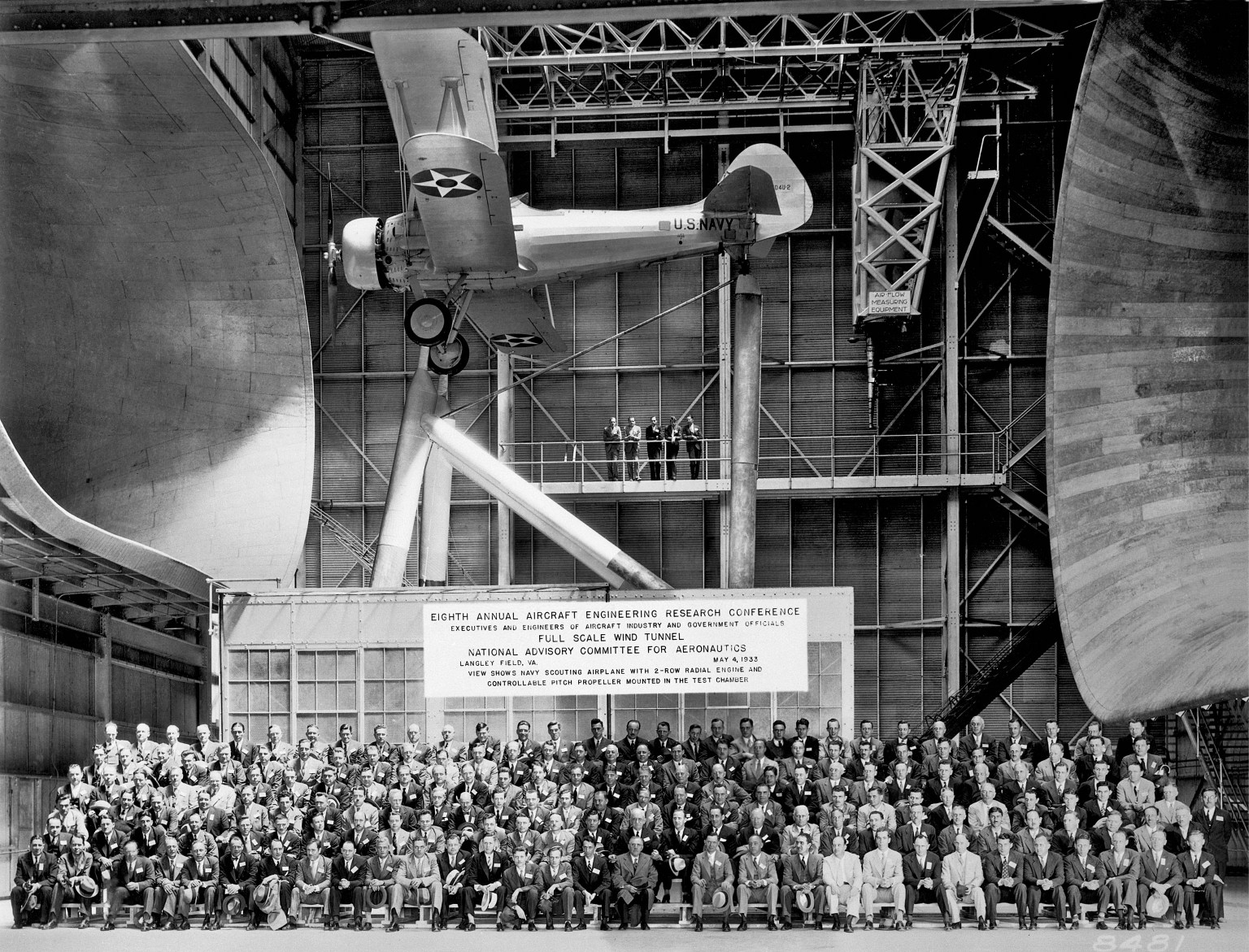
However, it wasn't until June 11, 1920, when the NACA's first wind tunnel was dedicated, that the nation's first aeronautical research center had its real beginning at a permanent site staffed by its own employees, in its own facilities, and with its own program of aeronautical research. The facility was then officially designated "Langley Memorial Aeronautical Laboratory." The research efforts were overseen by an advisory committee of noted scientists and aviation pioneers, including Orville Wright and Charles Lindbergh. Over the years, LaRC has grown to over 700 acres. A map showing real estate acquisition is available.

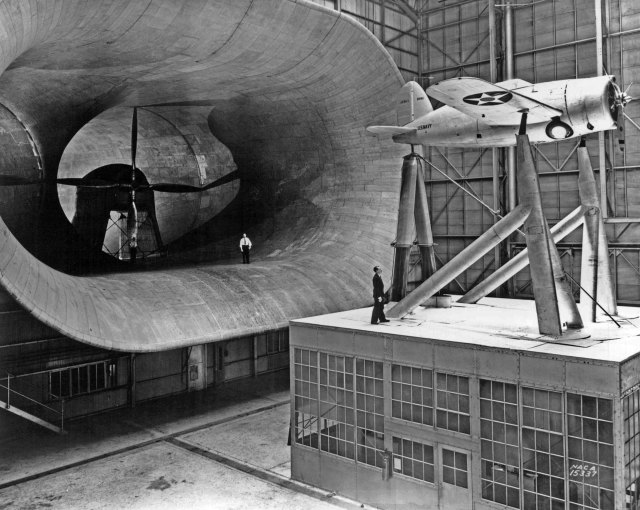
Studies conducted at the facility contributed to the application of new technologies in military and civil aircraft (map of wind tunnel sequence of construction). Virtually every aircraft in the U.S. civil and military inventory makes use of technology developed at Langley (Chambers 2010 presentation). Furthermore, many leaders in the aerodynamics field participated in the work conducted at the center. Seven of the original astronauts were trained here in the 1950s and 1960s.

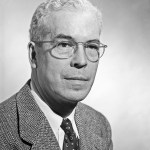
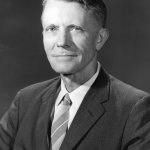
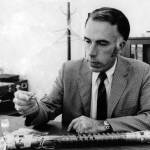
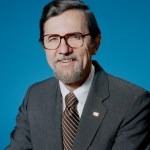
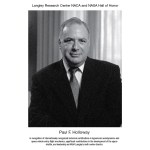
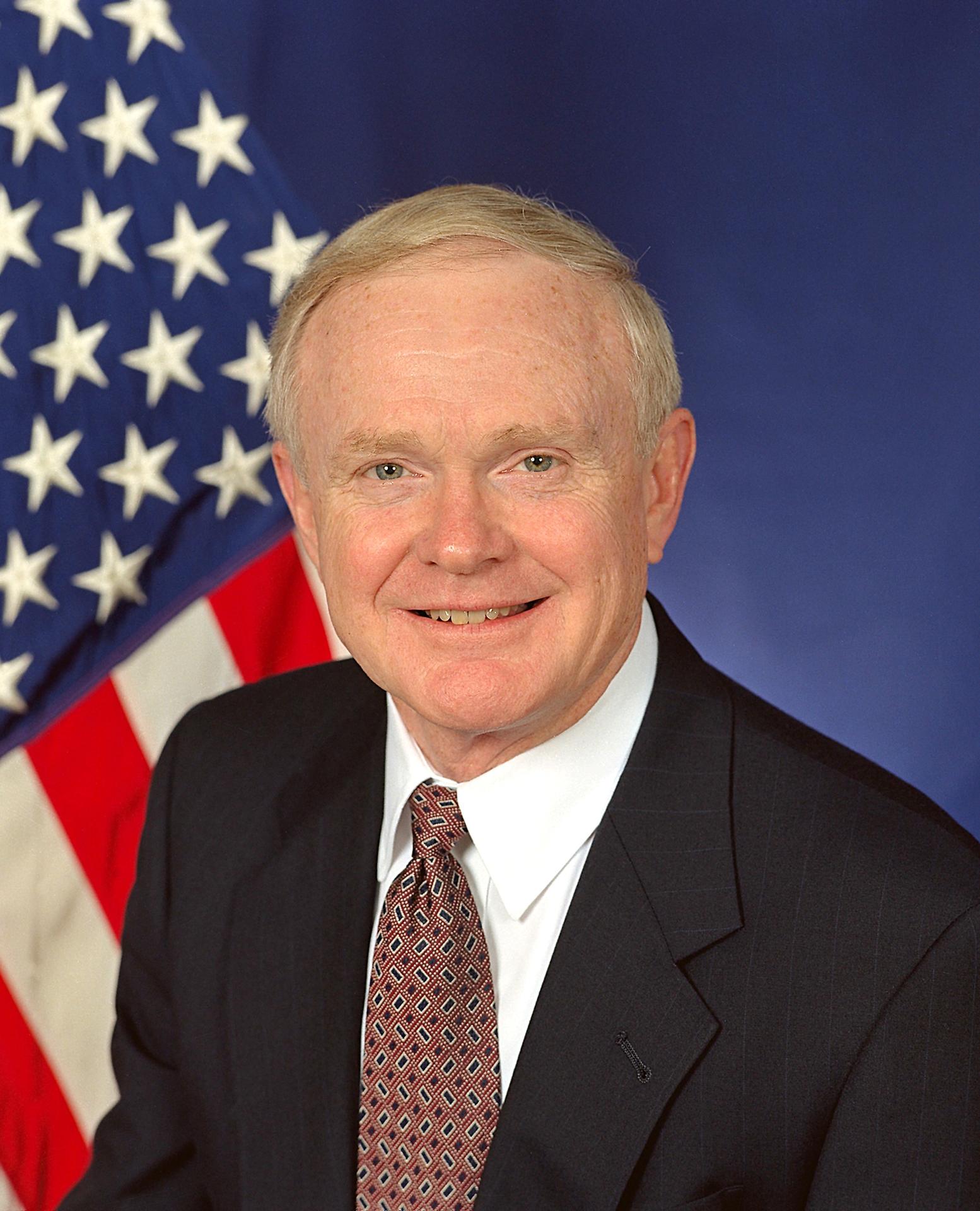
During these early years, Mr. L.M. Griffith served as Engineer-in-Charge. He was followed in 1926 by Dr. Henry J.E. Reid, who served as Engineer-in-Charge and subsequently as Director until he retired in 1960 soon after the National Aeronautics and Space Administration (NASA) succeeded NACA in 1958. From 1960 to 1968 LaRC was under the direction of Dr. Floyd L. Thompson. From 1968 to 1977 the Director was Dr. Edgar M. Cortright, an Aeronautical Engineer and organizer of numerous space programs. From 1977 until December 1984, the Director was Donald P. Hearth. Richard H. Petersen, a long time NASA researcher and manager, was Director from January 1985 to October 1991. Director from 1991 to 1996, Paul F. Holloway was previously Deputy Director from 1985 to October 1991 and a Langley engineer since 1960. Dr. Jeremiah Creedon was named director in August 1996. Creedon began his career at Langley in 1963 as a research engineer in the Instrument Research Division. Dr. Creedon was named Associate Administrator for the Office of Aerospace Technology at NASA Headquarters in Washington effective June 15, 2002. Delma Freeman, Jr,. the Deputy Center Director, assumed duties as Acting Director and subsequently was named director. The appointment of Gen. Roy Bridges, former director at Kennedy Space Center, was announced at Langley June 2003 and he remained until his retirement in January 2006. Lesa B. Roe was named director effective October 3, 2005. Roe served as Langley's associate director for business management from August 2003 until being named deputy director.


[top] Initial Activities

Langley Research Center was originally established to explore the field of aerodynamic research involving airframe and propulsion engine design and performance. The results of these research efforts were made available to government, industry, and others. Early in 1943 the Center expanded to include rocket research, leading to the establishment of a flight station at Wallops Island, Virginia. A further expansion of the rocket research program effectively permitted Langley Research Center to orbit payloads. (See early video).

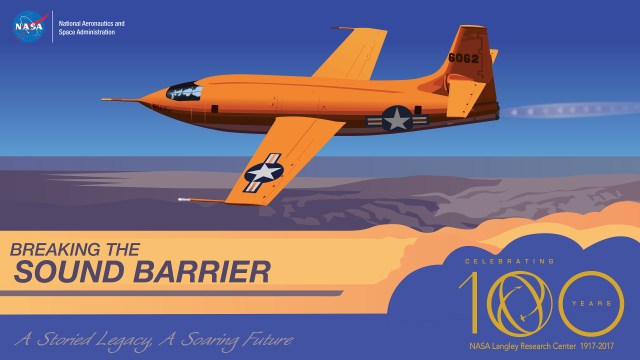
Significantly, during the period of growth of the rocket research program, aeronautics research activities continued to expand at Langley and played an important part in the Center's activity when subsonic flight was advanced and supersonic and hypersonic flight were introduced. This led to extensive research on supersonic transports, X-15, F-111, and V/STOL configurations. Langley Research Center has supported all of the major NASA, Department of Defense, and Department of Energy programs assigned to the various NASA centers by providing scientific investigations, laboratory tests, and extensive research.

As the oldest and most comprehensive research installation of NASA, Langley Research Center can claim many historic firsts, some of which have proven to be revolutionary scientific breakthroughs. These accomplishments include the conception and development of research aircraft leading to supersonic flight; the construction of the world's first transonic wind tunnels; the origination of the Area Rule, a design principle regarded as the key to practical supersonic flight; the invention of automatically erectable spacecraft, leading to development of Echo passive communications satellites; and the development of Scout, the first all solid-fueled launch vehicle to rocket a United States satellite into orbit.

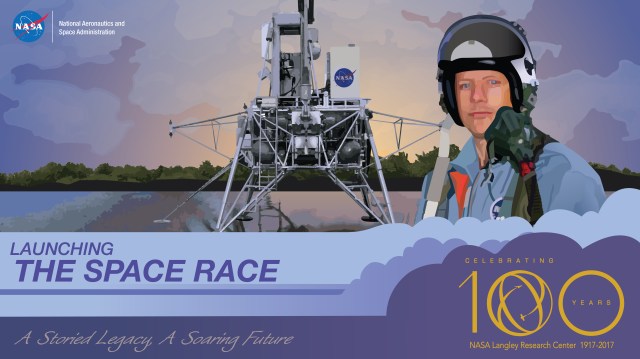
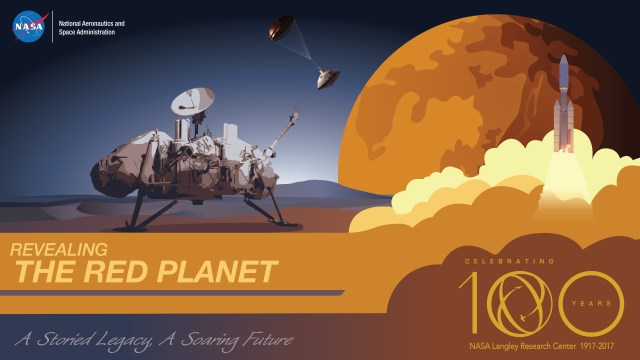
There have been many more Langley contributions. It was here that "Project Mercury" was born, sending the first American astronaut into space. It was here that the huge Lunar Landing Research Facility was located, providing for the simulation of lunar gravity in order to develop exploratory spacecraft and to perfect lunar landing techniques. Also, it was at Langley Research Center that the highly successful Viking program for the scientific exploration of Mars was managed.

Langley was established for identifying and finding solutions to the many challenges of aviation, and the people pioneered many new technologies and concepts that have helped transform our aeronautical world. An excellent resource which examines the center's most significant achievements between 1917 and 2002 is From Research to Relevance.

1970 Alan Shepard.jpg

1970 Alan Shepard at Lunar Landing Facility

Original astronauts.jpg

Seven Original Astronauts in Training at Langley in 1961


[top] Growth

1930 Aerial
The growth of Langley has been periodic. World War I was over before NACA's "field station" at Langley Field commenced useful operations. During the 1920s and early 30s, many significant NACA research projects added immeasurably to man's knowledge of flight, and the work of the agency became internationally known and respected; but until the beginning of World War II, the growth of Langley was relatively slow. Then, suddenly faced with war in Europe and the threat of expansion of aeronautical research facilities by other nations, the Committee realized that further intensification of research was desperately needed if America was to continue its leadership in the technical development of aircraft. The resulting rapid expansion of research facilities at Langley brought forth startling developments such that by the end of World War II, new turbojet and
1931 Hangar
rocket engines made possible unmanned flight in the upper atmosphere at supersonic speeds. The power available in these newly developed turbojet and rocket engines opened vast new areas of research concerned with the many problems encountered in supersonic, and later, hypersonic flight. Successful research launched the United States into the Space Age and contributed greatly to the growth of Langley.

Congress passed the "National Aeronautics and Space Act" in 1958, terminating the NACA and marking the beginning of the "National Aeronautics and Space Administration." (See letter to employees announcing change.) The excellent NACA laboratories at Langley and three other installations formed the nucleus of the new civilian agency to be known as NASA. NACA's "Langley Laboratory" became officially designated "the Langley Research Center of the National Aeronautics and Space Administration."

During the years that followed, Langley Research Center grew rapidly. Paralleling and continuing acceleration in space exploration programs and growth of civil and military aviation, there has been rapid growth in the nucleus of top level research personnel and an increase in the facilities at the Center.

The Office of Public Affairs maintains a detailed history of the center. The Langley Alumni Association is another resource for our center's history. The Alumni’s purpose was to develop, maintain, and enhance the relationship among former employees of the Langley Research Center and provide a mechanism for the Center to maintain contact with its former employees. It also provided an organized way for members to support special events at the Center and other activities of mutual interest.


[top] 50 Years of Service to the Nation

In 1967, Langley Research Center celebrated its 50th anniversary. Besides many events held on the center, special newsletters were printed, including the following.

NASA Research Center Contributes to Efforts of NASA During First Five Years to Add to Knowledge of the Universe

Langley Research Center, Birthplace of Project Mercury, Contributes to Success of Manned Space Flight Program

Tradition of Nearly Half Century of service to Science of Flight Permits Langley Staff to Look with Confidence to Moon, Planets


[top] NACA/NASA Projects


[top] Social Impacts

[top] Recent and Current Activities

[top] Partnerships and Public Outreach

Virginia Historic Highway Marker Unveiling

Historic Garden at Cloverdale Plantation with C.A.R.

Archaeology Field School at Chesterville Plantation with Fairfield Foundation

Jamestown and NASA

[top] Demolition and Salvage Activities

The landscape at Langley has seen some significant changes since the fall of 2010.

One can't miss the newly constructed, modern administrative office building that's just past the main gate. Constructed in less than two years, this efficient, environmentally friendly building will soon be home to about 260 people from six organizations. It is also just the first phase of New Town as we revitalize the entire Center.

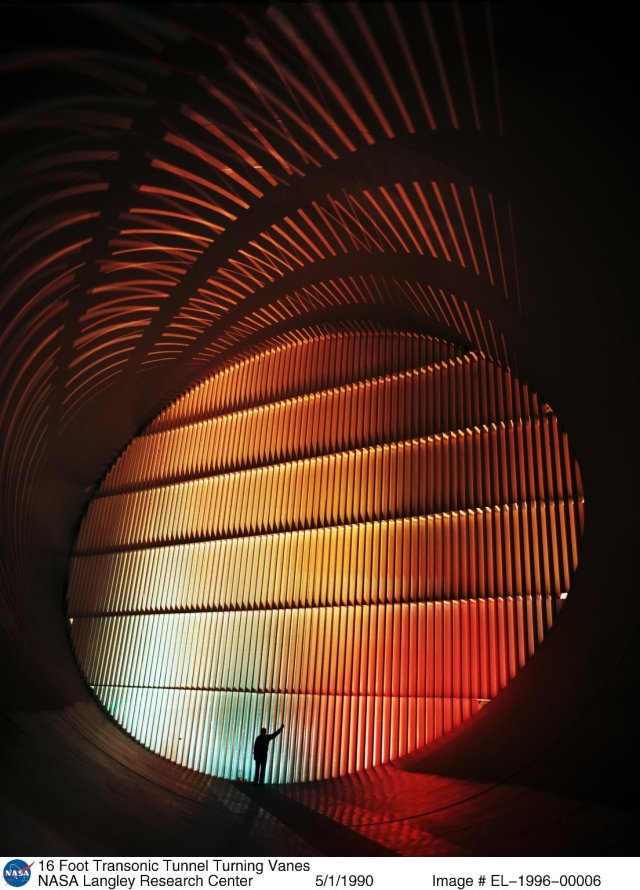
Just around the corner from the new building can be seen one of the most visible changes to our center, both from inside as well as outside the gates, and that's the demolition of the 16-Foot Transonic Tunnel which has been an integral part of our Center for 70 years. Out of sight for most people on center, but in the hearts of many current and former employees, is the 80-year-old 30 X 60 Full Scale Tunnel on the east side. Demolition of this wind tunnel, as well as the two adjacent 8-foot tunnels, the 8-Foot High Speed Tunnel, and the 8-Foot Transonic Pressure Tunnel was recently completed. Enough can't be said about these wind tunnels, some of the most historically significant in our nation, or to the impacts made by the people who worked there during their combined 150 years of service.


As part of the demolition process, historic artifacts and other items are identified both for retention at NASA Langley and for public outreach and display purposes.

View the List of Salvaged Artifacts to see the new homes for these items.

[top] Photos and Videos

The Photo Lab in the Media Solutions Branch maintains original film negatives of all L-numbered film images as well as master files of all L-numbered digital photographic images. If you are a NASA employee, contact the Electronic Photography Lab (EPL) at 864-3524 or E-mail: LaRC-DL-PhotoLab@mail.nasa.gov to obtain a high resolution copy. If you are not a NASA employee, contact Mary Gainer.


[top] Maps

[top] Documents and Directories

[top] Public Announcements

[top] Historic District Listing

The NASA Langley Research Center Historic District is now a reality. After completing the public comment period in November, the nomination package was reviewed and accepted at the December 2011 state review board meeting. The Historic District, which includes our current center boundary as well as the NACA buildings now owned by Langley AFB, is now listed in the Virginia Landmarks Register. The package will next be reviewed by the National Park Service for inclusion in the National Register.

The full nomination package is available for review.


[top] Internships and Research Topics

The cultural resources program at NASA Langley Research Center has many exciting internship opportunities in architecture, archaeology, colonial history, aeronautical history, and environmental GIS. In addition to projects listed below, a wealth of primary source material is available for graduate research. All fall intern positions are on a volunteer basis unless you are able to secure your own funding. As volunteers, there is no age or student-status requirement. Positions are part-time and hours are flexible however, on-site positions must be worked weekdays only.


Internships provide hands-on, real-life, career-related experiences that challenge, inspire, and provide practical application that complements and expands upon students' academic education. Please send resume and cover letter addressing the project you are interested in, what you would gain from an internship at NASA, and what you feel you can offer to our organization if selected. Email to Mary Gainer or send to her attention at NASA Langley Research Center, MS 213, Hampton, VA 23681. You must either hold a current NASA badge or must be a US citizen and pass a security background check.


1) Continue research started by other interns to reconstruct the landscape during the mid-1800s. Contribute to the overall landscape reconstruction for the Civil War Anniversary this year, particularly in relation to the Battle at Big Bethel. Project can include such activities as locating letters or journals, preparing 3D landscapes and video clips such as found at http://www.nps.gov/mono/photosmultimedia/virtualtour.htm, researching deeds to expand the plantation map in GIS, or general research to improve our understanding of the activities at the various plantation sites. We are also open to student proposals on research. Our current efforts are documented at http://crgis.ndc.nasa.gov/historic/Langley_Media under ‘Pre NACA/NASA.’

2) Document the changing of road names at the center. The names which appear on public maps were changed in the early 1990s. The reasons for the changes and the significance of the names has not been documented other than internal memos. Changes were also made to road names across the City of Hampton. Few people in the area recognize the links of names to NASA programs. This would be appropriate for a short-term project of 4-12 weeks.

4) Assist with documentation of aircraft and flight activities. The work will be separated into two time periods: Early Flight Research (1919-1954) and Modern Flight Research (1955-Present). This break into the two sections relative to the year that we moved flight from the East Area hangar (750), to the new West Hangar (1244). Work will consist of either locating scanned images of early aircraft or scanning more modern photos, and researching to document the name of aircraft, years tested at NASA, a cross reference to buildings tested in, and reason it was brought to NACA/NASA for testing. This project can be scaled to suit various lengths of time and can accommodate multiple students.

5) Review test logs and add brief descriptions of test (dates, company, findings) to the corresponding test photos on the website. A good example of model photos is Additional_Photos_for_12-Foot_Low_Speed_Tunnel_3. Clean-up work may also include reviewing other model photos for the associated tunnel to consolidate and match the test log. This would be appropriate for a short-term project from 4-12 weeks.

6) Research the role played by Army and Air Force employees at Langley Research Center to chronicle and collate the information on the timing and scope of the cooperative Army/NASA/Air Force facility and personnel activities. There may also be a story on the Air Force's Liaison Office. Some of the Army contingent from the 1970s still work at the Center and should be interviewed. Work best suited to college level and possible Master's thesis material.

8) GIS intern to create and/or edit environmental data layers such as vegetation, habitat, and archaeological sites. Position requires working knowledge of ESRI products. Work must be completed on site.

9) Research the development of the HL-10 and HL-20 at Langley Research Center. Existing documentation includes primary sources as well as secondary. Topic suitable for history major and may be appropriate for thesis subject.

10) Various Historic Preservation topics:

  • Women at work - document the societal impact of women coming to work at NACA during WWII and filling traditional male roles. This can possibly be broken into several smaller projects looking at a variety of issues.
  • Syms School - life and legacy of Benjamin Syms, education in SE Virginia, funding for education, maps and photos, chronology
  • Moorefield - family history, architecture (comparisons to Moore House), chronology, photographs
  • Chesterville - life of George Wythe in Elizabeth City County, history of original stone house, materials culture of pre-Revolutionary America from Norton's records of Wythe's purchases from London, Hamilton St. George - Loyalist overseer of George Wythe's
  • LRC Historical and Archaeological Society - formation and goals of the historic preservation society in the 20th century
  • Frank Farmer - career as a scientist at NASA and his enthusiasm for archaeology and historic preservation

11) Research the role NASA Langley played in testing the aircraft used during the Vietnam War. The aircraft developments at Langley are a forgotten part of the 'forgotten' war. This is an excellent opportunity for a history major interested in this era.

12) The birth, life, and death of aircraft engine work at Langley. This work started around 1934 in what is now known as building 584. The research was moved to Cleveland, Ohio (now Glenn Research Center) about 1940 following the 1939 report of Charles Lindbergh's Special Survey Committee on Research Facilities - which led to the establishment of the new facility.

13) Complete work in LAYAR project to develop walking tour using smart phones. Also develop concept of printed walking tour. 10-12 week project, part of which can be worked offsite.

[top] Announcement Archives

Personal tools
Navigation